Open Source & Community
Strengthening the Ecosystems Our Clients Depend On
Home Open Source & Community
We invest in open source and community participation because stable, predictable technology environments don’t exist in isolation. They are shaped by shared knowledge, tested ideas, and tools that respect how people actually work.
For us, this work is not separate from client service. It is one of the ways we help ensure the environments we support remain resilient, adaptable, and aligned with the workflows and cultures they serve.
Designing for continuity, not disruption
Organizations rely on technology for years at a time. When tools change abruptly—through acquisitions, strategic pivots, or redesigns—the impact is rarely limited to features. These shifts can disrupt established workflows, erode user confidence, and force teams to adapt to changes they did not ask for or need.
Our focus is always on the downstream experience: how changes affect the people using the tools, the expectations they’ve built, and the culture that has grown around them. When continuity matters, flexibility and transparency matter too. Open-source tools allow environments to evolve without forcing unnecessary disruption on users or teams.
Building tools when existing ones fall short
We don’t build tools casually. We build them when repeated, real-world needs surface and existing options either don’t exist or require compromises that negatively affect user experience, workflows, or long-term stability.
In those moments, the priority is not innovation for its own sake. It is preserving clarity, respecting culture, and ensuring organizations are not forced to reshape how they work to accommodate rigid or fragile tooling.
Baseline — protecting workflows and organizational culture
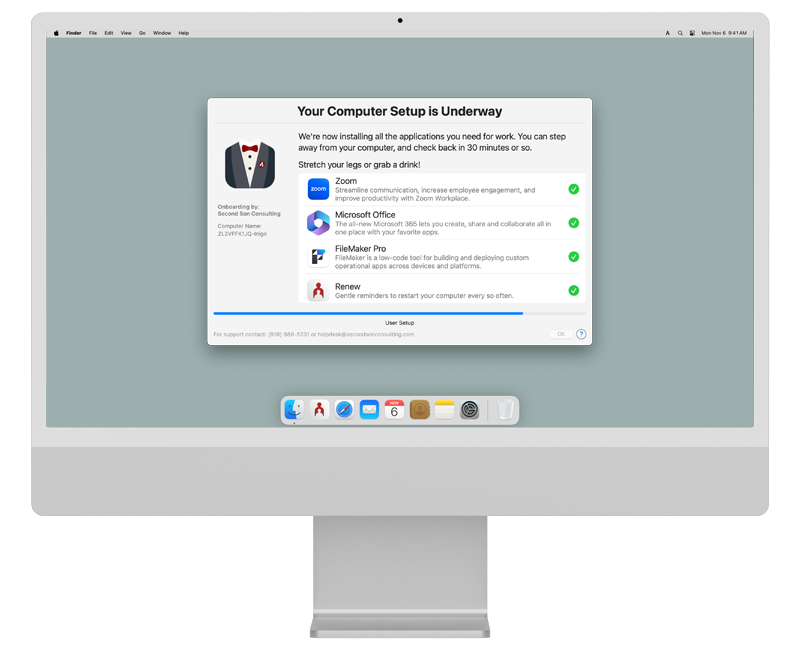
Baseline was created because there was no existing solution that allowed us to standardize Mac deployments without dictating how organizations should operate. We needed a way to establish a reliable starting point while allowing each organization to shape the experience to match its own culture, standards, and workflows.
Designed as an open-source, MDM-agnostic framework, Baseline functions as a flexible foundation rather than a prescriptive system. Organizations can adapt it to their onboarding philosophy, internal ownership model, and technical environment without being locked into a specific vendor or workflow.
Today, more than 600 organizations across the globe use Baseline. That adoption reflects a shared need for deployment workflows that prioritize continuity, flexibility, and respect for how teams work.
Renew — supporting healthy IT environments
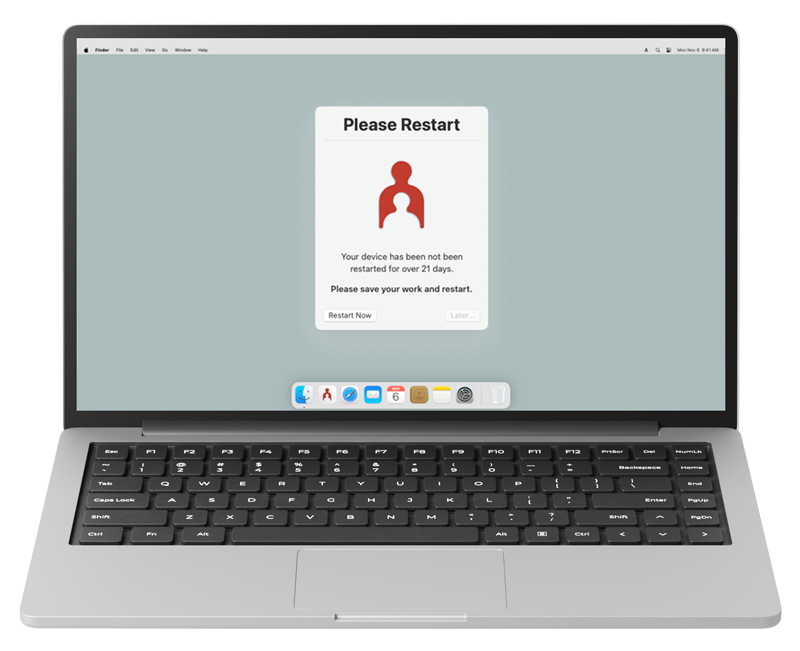
Renew exists because healthy reboot habits play an important role in maintaining stable IT environments of all kinds. Regular reboots allow operating system and security updates to complete, help stalled processes reset, refresh network connections, and ensure background services such as backups and device management (MDM) resume and operate as intended.
In many organizations, reboots are delayed or avoided simply because there is no clear, user-friendly way to encourage them. Renew was built to address that gap by providing a lightweight, reliable reminder that works independently of management frameworks and can be customized to match an organization’s tone, expectations, and culture.
By focusing on clarity and consistency rather than enforcement, Renew helps organizations maintain system health without disrupting users or workflows. Nearly 500 organizations worldwide now use Renew, reflecting a broad, practical need for simple approaches to device hygiene.
What these tools reflect about our approach
Baseline and Renew are not exceptions to how we work. They reflect a preference for systems that age well, adapt gracefully, and avoid forcing unnecessary change onto users.
These same principles guide our work across Foundations, Infrastructure & Networking, Strategy & Planning, and Support & Helpdesk, where clarity, continuity, and long-term stability matter more than short-term convenience.
Community participation and shared learning
Open source thrives on community, and so does our work. We actively participate in the Apple IT ecosystem through sponsorship, collaboration, and shared learning, including ongoing involvement with the Mac Admins Foundation and daily engagement within the MacAdmins Slack community.
Beyond written contributions, we regularly share ideas and experiences through talks, discussions, and community events. Rather than treating these moments as static credentials, we view them as part of an ongoing conversation. As those conversations evolve, we link to recordings, write-ups, and community resources here so this page can grow alongside the ecosystem.
This participation functions as a continuous feedback loop. It exposes us to a wide range of environments, emerging challenges, and evolving best practices, helping us refine our thinking and stay grounded in the realities teams face every day. Some of this participation takes place beyond our own platforms. You can find those external conversations on our In the Community page.
What this means for our clients
Because we build, maintain, and contribute beyond individual client environments, we bring broader perspective to every engagement. We see patterns earlier, understand edge cases more deeply, and make decisions informed by real-world experience across hundreds of organizations.
The result is technology guidance and implementation that prioritizes continuity, respects culture, and supports teams as they work—today and over time.